

TRAUMA-ATTACHMENT THERAPY
in FALLS CHURCH, VA
and NY
WITH OLYMPIA GEORGESON,
M.A., M.F.A, LMHC, LPC, NCC


CLINICAL SUPPORT FOR EMOTIONAL HEALING
in VA and NY
& Mental Wellness
As a psychotherapist, I offer individual therapy for adults seeking deep emotional healing, trauma recovery, and support with anxiety, attachment wounds, or relationship stress.
Therapy provides a confidential space to process the past, understand your patterns, and develop tools for emotional regulation and self-trust.
Together, we’ll work to help you feel grounded, connected, and more at ease in your daily life and relationships.
Therapy may be a good fit if you are looking for:
⬥ Clinical treatment for anxiety, depression, trauma, or mood disorders
⬥ Long-term support in understanding and healing family or attachment dynamics
⬥ A safe, private space to process life transitions, loss, or relational pain
⬥ A trauma-informed, relational approach to mental wellness
For summaries on my therapeutic areas, please visit my service page. There you will find a list of services:
Trauma & Relationship Betrayal Trauma Therapy
Breakup & Divorce Recovery Therapy
Trauma Bond Recovery
Obsessive Attachment
Narcissistic Relationship Recovery
Attachment-focused Therapy
Couples Therapy
For more in-depth therapy for faster healing, check out my intensives:
Psychodynamic Attachment Intensive
EFT, Imago, and Gottman Couples Therapy Intensive
HOW THERAPY IN FALLS CHURCH, VA WORKS
-
“Research suggests that there may actually be neurological changes in the brain resulting from psychotherapy (Etkin, Pittenger, Polam, & Kandel, 2005). These findings suggest that memories that are raised and reexperienced in a new way get laid down differently back into brain, supporting the cognitive psychologists’ theories about schema (i.e. clusters of related thoughts, feelings, actions, and images) change.” (Hill, 259)
So interpretative work can help you change your schemas (ways of thinking), and then action (changing your behavior) to help reinforce or consolidate the schematic changes (connections).
Through interpretations…
-- “the conscious is made conscious and more under ego control
--discrepancies between perspectives propel clients to change in the direction of resolving the discrepancy
-- interpretations cause changes in schematic connections
-- reprocessing memories helps change brain structures
--we rewrite the narratives in more adaptive ways.” (Hill, 259)
-
In the Assessment phase (includes both the subjective and objective interview), I will help you tell your life story. While listening, I will extract patterns in your life and develop hypotheses about what works for you. I may end the subjective interview with the question, “How would your life be different, and what would you be doing differently, if you did not have this symptom or problem?” The objective interview seeks to discover information about how problems in your life began, major events, medical history, and your coping with life tasks.
In the exploration stage, you will further tell your story. You may decide to vent about physical aches and pains, of aging, of not being able to do what you used to do, of not knowing what to do with your time, of wanting to leave a legacy, about the death of a family member, or of wondering about spirituality. All of these topics and others will be explored further to help you deal with existential crisis.
“Interestingly, Yalom suggested that clients often feel more rather than less anxious after talking about existential issues because they realize they cannot control many things in life.But ideally, by talking about existential issues rather than defending against them, they gain in terms of living more meaningful lives.” (Hill, 262)
-
In the insight stage, we will use several sources of data to develop interpretations: verbal content of your speech, past experiences, interpersonal patterns, defenses, developmental stages, existential concerns and spiritual issues, and unconscious activities (for the unconscious runs 95% of our thoughts).
Interpretations can also be developed from clues about unconscious activities, most typically observable through dreams, fantasies, and slips of the tongue.
How do we implement change in your life?
The action stage, based on behavioral theory, centers on helping clients make desired changes in their lives and inner lives. This model emphasizes a number of themes, including empathy, collaboration with the client throughout therapy, cultural considerations, and a focus on what the individual client needs. Your needs are my number one priority, even if your needs conflict with my own cultural perspective, values, and philosophy on life.
Change is a process of identifiable stages through which people pass: precontemplation, contemplation, preparation, action, and maintenance. The key is to match the therapeutic interventions to the person’s stage of change; therefore, I will meet you at whatever stage you’re in and not encourage you to act when you are not ready. Genuine, determined action is then taken and, over time, attempts to maintain the new behavior or lifestyle change occur.

My goal is to help you move from confusion to clarity, from survival mode to self-trust, and from emotional chaos to a life that feels meaningful, intentional, and connected.
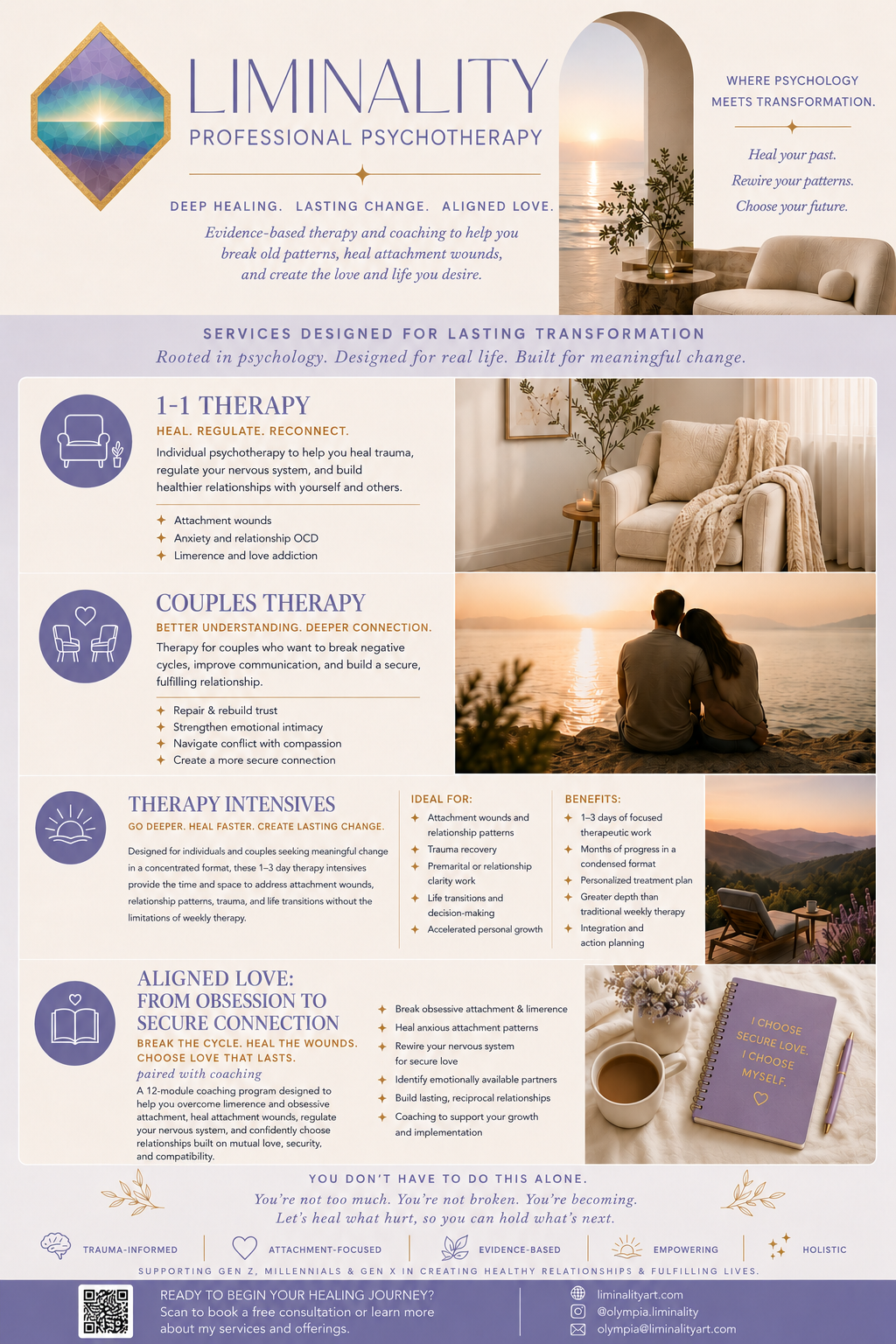
1-1 THERAPY
50-minute individual session: $200
Intake session: $225
60-minute individual session: $240
75-minute sessions may be available at an additional fee.
COUPLES THERAPY
Couples therapy focuses on the patterns that develop between partners—communication styles, conflict cycles, trust ruptures, and unmet attachment needs. Rather than focusing on one individual, the work centers on understanding and shifting the relational dynamic so both partners can feel heard, respected, and emotionally safe.
No Secrets Policy
Couples therapy works best when communication is open and transparent. For this reason, I use a “no secrets” policy in couples work. If one partner shares information individually that significantly impacts the relationship, that information may need to be brought into the couples session so the work can remain honest and productive.
The goal of this policy is not to create pressure, but to support a therapy process that prioritizes clarity, fairness, and trust between partners.
50-minute couples session: $250
60-minute couples session: $300
75-minute sessions may be available at an additional fee.



COACHING SERVICES STATEWIDE AND ABROAD
If you’re drawn to this work but live elsewhere—or if you’re ready for a more forward-focused, embodied approach—explore my other offerings:

1:1 Coaching
1:1 coaching to those out of state or abroad to help you unlearn old patterns, rebuild safety, and practice love that feels secure and alive.


INTERESTED IN A COACHING PROGRAM?
Aligned Love curriculum program helps you unlearn toxic attraction, rewire your nervous system for inner safety, and realign with relationships that feel clear, steady, and true.